
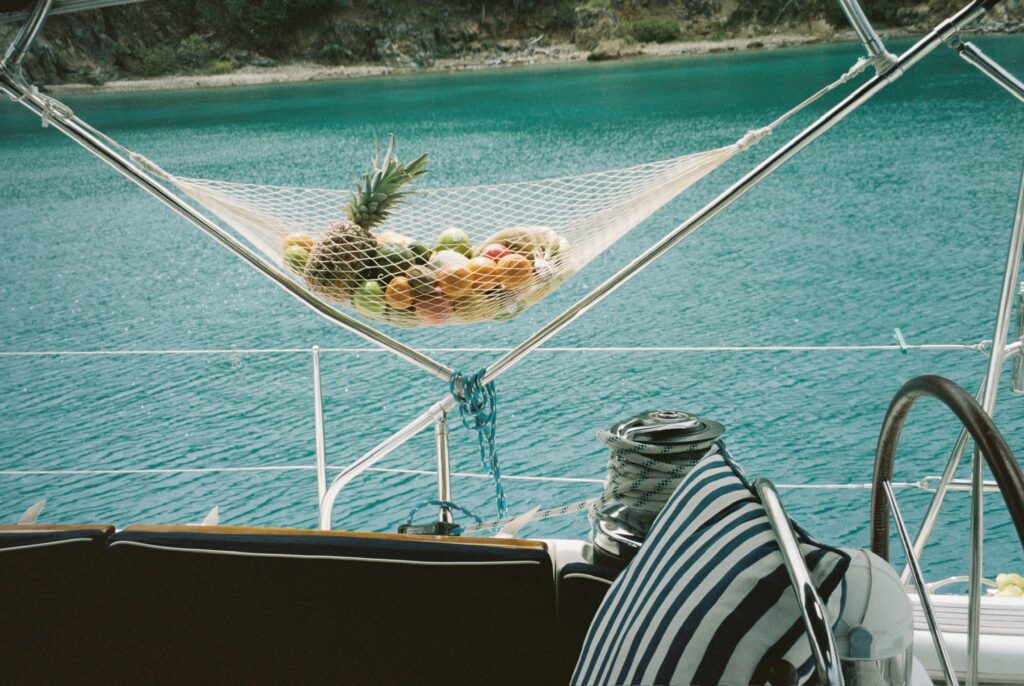
If you’ve never been on a sailing holiday before, booking a crewed charter in the British Virgin Islands can feel exciting and a little intimidating at the same time. This guide walks you through what actually happens on board, day by day, so you know exactly what to expect from your first sailing charter in the BVI.
Why the BVI is perfect for first‑time sailors
The BVI is often called the “sailor’s playground” for good reason. Distances between islands are short, the waters are mostly sheltered, and there are safe anchorages everywhere. That means you spend more time swimming, exploring and relaxing, and less time dealing with long, bumpy passages. For a first‑time charter guest, it’s one of the most stress‑free places in the world to discover life on the water.
Your home on the water
The yacht and cabins
On a crewed charter, the boat is your floating boutique villa. You’ll have:
- Private cabins with comfortable beds and storage.
- A saloon (indoor lounge) and shaded cockpit for dining and relaxing.
- Plenty of deck space for sunbathing and enjoying the views.
Your crew will show you around when you arrive, explain how to use the lights, fans and bathrooms, and make sure you feel at home. You don’t need any sailing experience to enjoy the boat – everything technical is handled for you.
Safety briefing (simple and calm)
Before you set off, your captain will give a short safety briefing. It usually covers:
- How lifejackets and safety gear work.
- Where to hold on when moving around at sea.
- What to do if you’re ever unsure – ask the crew.
This is relaxed and conversational, not a drill. The aim is simply to give you a few basic habits so you can enjoy yourself without worrying.
A typical day on your first BVI charter
Every charter is tailored to you, but most days follow a gentle rhythm.
Morning: quiet bays and swimming
You’ll wake up at anchor in a calm bay, often with turquoise water and a quiet beach nearby. Mornings usually include:
- Fresh coffee and breakfast on deck.
- A swim or snorkel straight off the back of the boat.
- Time to read, journal, or just watch the light change on the water.
When you’re ready, the captain will talk through the plan for the day: where you’ll sail, any snorkel spots or beach bars, and options depending on the wind and your mood.
Late morning: sailing to the next island
Once the sails are up, you’ll feel the boat lean gently and start gliding through the water. For first‑timers, this part is often a highlight:
- The motion is usually smooth and steady.
- You can sit in the cockpit, up on deck, or inside if you prefer.
- If you’re curious, the captain can show you how steering, sails and navigation work.
Sails between islands can be as short as 30–90 minutes, so you’re never “stuck” at sea all day unless you choose a longer passage.
Lunchtime: beach bars or on-board meals
Midday is often spent at a new anchorage:
- Lunch might be served on board or at a beach restaurant.
- You can swim, paddleboard, or walk ashore.
- It’s a good time for photos – anchorages are usually at their most vibrant.
Your crew will help you get ashore with the dinghy and keep an eye on weather and timing, so you don’t have to think about logistics.
Afternoon: exploring or relaxing
Afternoons are flexible. Depending on what you enjoy, you could:
- Snorkel over reefs and wrecks.
- Visit a famous beach bar or quiet cove.
- Sail on to another island for sunset.
This is where the BVI really shines: you’re always close to another bay, so the crew can adjust the plan if you prefer somewhere livelier or more peaceful.
Evening: sunset and dinner on board
Most guests fall in love with evenings:
- The boat is anchored in a sheltered bay; the water calms and the light softens.
- You may have sundowners in the cockpit, watching other yachts and the shoreline.
- Dinner is usually served on board, tailored to your preferences.
After dinner, many people sit under the stars, talk with the crew about local life and sailing stories, or head below for a good night’s sleep.
How much sailing is “too much”?
First‑time guests often worry they’ll feel tired or seasick. On a well‑planned BVI itinerary:
- Passages are short and can be timed for calmer parts of the day.
- You can choose more time anchored and less time moving if you wish.
- If you ever feel uncomfortable, the captain can change course or tuck into more sheltered waters.
You’re in control of the pace: some guests love to sail every morning, others prefer a few longer stays in favorite bays. Your crew will adjust.
What you actually need to do as a guest
You don’t need to “work” on the boat unless you want to:
- The captain handles navigation, mooring, anchoring and sailing.
- The crew looks after meals, basic housekeeping and dinghy trips.
- As a guest, you can:
- Help with lines or the helm if you’re curious, or
- Simply relax and enjoy the ride.
Think of it as staying in a small, moving hotel where you can join in behind the scenes if that interests you.
Common first‑time worries (and how they’re handled)
“Will I get seasick?”
The BVI’s protected waters and short hops between islands mean conditions are usually gentle. If you’re concerned:
- Your captain can choose routes with more shelter.
- You can stay in the cockpit, where the motion feels more stable.
- The crew will offer you motion sickness tablets as a backup, just in case.
“Is it safe for kids or non‑swimmers?”
On a crewed charter:
- Lifejackets are available and can be worn whenever you like.
- The crew will brief children and non‑swimmers carefully and keep a close eye on them.
- There are many anchorages with calm, pool‑like water that are ideal for families and less confident swimmers.
“What if I don’t know anything about boats?”
Most first‑time guests don’t. You’re not expected to understand anything technical. Your captain will explain the important bits in plain language and repeat things as needed. By the end of the trip, many guests feel they’ve learned a lot about sailing without ever feeling out of their depth.
What to pack for your first BVI charter
You don’t need much. A simple list:
- Soft bag instead of hard suitcase (easier to stow).
- Swimwear, light clothing and one warmer layer for breezy evenings.
- Reef‑safe sunscreen, hat and sunglasses.
- Lightweight shoes or sandals for going ashore.
- Any personal medications and motion sickness tablets if you’re prone to travel sickness.
On board, the crew provides safety gear, linens and normal household basics.
Why a crewed charter is ideal for your first time
For a first‑time sailing holiday, a crewed charter removes the pressure:
- You don’t need to plan routes, study charts or watch weather – that’s the captain’s job.
- You don’t need to cook every meal unless you enjoy it – the crew can take that on.
- You can ask questions at any time and adjust the plan as you learn what you like.
You get all the freedom of moving from island to island, with the comfort of having an experienced team looking after you and the boat.